
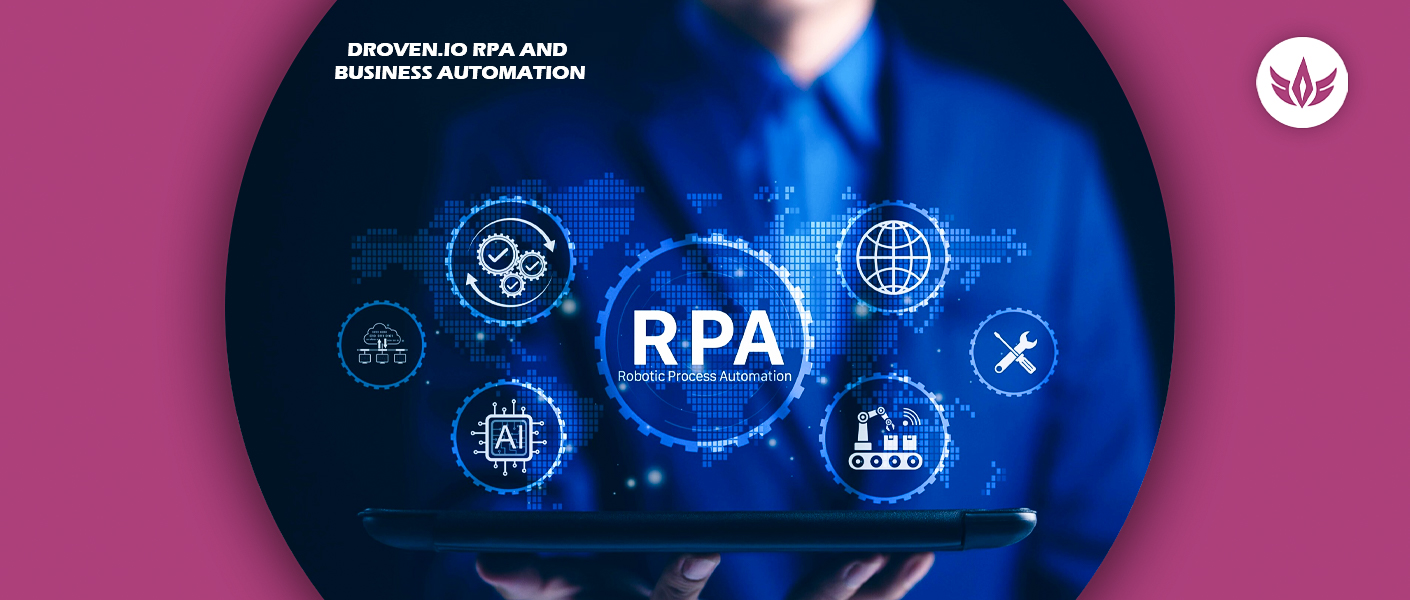
Businesses today are under constant pressure to improve productivity while keeping operational costs under control. Manual processes that once seemed manageable can quickly become obstacles as companies grow. This is where automation plays an important role. Many organizations are now exploring smarter ways to complete repetitive tasks, improve efficiency, and allow employees to focus on work that creates greater value. Among the growing number of resources available online, Droven.io RPA and Business Automation has gained attention for explaining modern automation concepts in a simple and practical way.
Rather than overwhelming readers with technical language, Droven.io introduces the fundamentals of robotic process automation (RPA), intelligent workflows, and digital transformation. Whether you are a business owner, IT professional, or someone curious about automation, understanding these concepts can help you make informed decisions about improving daily operations.
What Is Droven.io RPA and Business Automation?
Droven.io RPA and Business Automation is an informational platform that focuses on explaining how businesses can use automation technologies to improve efficiency. Instead of offering its own commercial automation software, it provides educational content that explores robotic process automation, artificial intelligence, workflow optimization, and digital transformation strategies.
The platform aims to make automation easier to understand for businesses of all sizes. Its content discusses how repetitive tasks can be automated, how AI enhances business processes, and why digital transformation has become an essential part of modern business operations. This educational approach helps organizations understand automation before choosing the right tools for their specific needs.
Understanding Robotic Process Automation
Robotic Process Automation, commonly known as RPA, is a technology that uses software bots to perform repetitive digital tasks. These bots follow predefined rules to complete activities that employees would otherwise perform manually. Unlike physical robots, RPA operates entirely within computer systems and applications.
Software bots can log into applications, copy information, process invoices, update databases, generate reports, and move data between systems. Since these tasks follow consistent rules, automation allows businesses to complete them faster while reducing manual effort and minimizing human errors.
RPA is especially valuable because it works alongside existing business software. Organizations often implement automation without replacing their current systems, making it an attractive solution for companies looking to improve efficiency without major infrastructure changes.

How Droven.io Explains Business Automation
One of the strengths of Droven.io is its ability to present automation concepts in a practical and accessible manner. The platform explains that automation is not simply about replacing human work. Instead, it focuses on allowing employees to spend more time on creative thinking, customer relationships, and strategic planning while software handles repetitive administrative tasks.
Droven.io also highlights the growing relationship between RPA and artificial intelligence. Traditional automation follows predefined rules, while AI-powered automation can analyze information, recognize patterns, and assist with more complex business decisions. Together, these technologies create smarter and more flexible workflows.
The platform also discusses low-code and no-code automation tools, making it easier for businesses without extensive programming expertise to build automated workflows that improve operational efficiency.
Key Features of Business Automation
Business automation includes several capabilities that work together to improve organizational performance. Workflow automation allows routine tasks to move automatically from one stage to another without requiring constant manual input. This helps teams complete projects faster while reducing delays.
Another important feature is intelligent document processing. Modern automation systems can organize digital documents, extract important information, and route files to the appropriate departments. This improves document management while reducing administrative workloads.
Automation platforms also support system integration, allowing different software applications to exchange information automatically. Instead of employees manually transferring data between systems, connected workflows ensure information remains synchronized across departments.
Analytics and reporting further strengthen automation by providing managers with real-time insights into business performance. Automated reports help organizations identify trends, monitor productivity, and make informed decisions based on accurate data.
Benefits of Droven.io RPA and Business Automation
Businesses that adopt automation often experience noticeable improvements in efficiency and productivity. By reducing repetitive manual work, employees can dedicate more time to innovation, customer engagement, and problem-solving. This shift increases both productivity and employee satisfaction.
Automation also improves accuracy by following consistent rules for every task. Whether processing invoices, updating customer records, or generating financial reports, automated workflows reduce mistakes that commonly occur during manual data entry.
Cost savings represent another significant advantage. Organizations spend less time on repetitive administrative work, allowing existing teams to accomplish more without proportionally increasing staffing requirements. Over time, these efficiency gains contribute to stronger financial performance.
Business automation also enhances customer service. Faster response times, more accurate information, and streamlined workflows improve the overall customer experience. Organizations can process requests more efficiently while maintaining consistent service quality.
Another important benefit is scalability. As businesses grow, automated systems can often handle increasing workloads more effectively than manual processes. This flexibility supports expansion without creating unnecessary operational complexity.

How RPA Works
Robotic Process Automation follows a straightforward process. It begins by identifying repetitive tasks that follow predictable rules. Once these processes are documented, software bots are configured to perform the required actions automatically.
The bot may log into applications, retrieve information, validate data, perform calculations, complete forms, update records, and generate reports. Each action follows predefined instructions, ensuring consistent execution every time the workflow runs.
Organizations continuously monitor automation performance to identify opportunities for improvement. As business needs evolve, workflows can be updated, expanded, or combined with artificial intelligence to deliver even greater efficiency.
Common Business Processes That Can Be Automated
Many departments within an organization can benefit from automation. Finance teams often automate invoice processing, expense approvals, payment reconciliation, and financial reporting. These improvements reduce processing times while improving accuracy.
Human resources departments use automation for employee onboarding, payroll administration, leave management, and recruitment workflows. Routine administrative tasks become more efficient, allowing HR professionals to focus on employee development and organizational planning.
Customer service teams automate support ticket routing, email responses, appointment scheduling, and customer notifications. These improvements reduce response times while providing more consistent service.
Sales and marketing departments also benefit through lead management, customer relationship updates, email campaigns, and performance reporting. Automated workflows improve coordination between marketing activities and sales operations.
Healthcare organizations automate appointment scheduling, patient record management, insurance processing, and administrative documentation. Retail businesses streamline inventory management, order fulfillment, product updates, and customer communications.
Manufacturing companies automate production reporting, quality inspections, inventory tracking, and supply chain coordination. Logistics providers improve shipment tracking, warehouse management, and delivery scheduling through automated workflows.
Real-World Applications
Automation is transforming businesses across nearly every industry. A manufacturing company may automate quality inspection reports that were previously completed manually. Financial institutions often automate compliance checks to improve regulatory accuracy while reducing processing times.
Retail businesses automatically update inventory levels whenever products are sold, preventing stock discrepancies and improving purchasing decisions. Customer support teams use automation to categorize incoming requests and direct customers to the appropriate representatives.
Healthcare providers automate patient registration, appointment reminders, and billing processes, improving operational efficiency while enhancing patient experiences. Educational institutions streamline admissions, student record management, and communication with applicants.
Small businesses also benefit by automating recurring invoices, customer follow-ups, appointment confirmations, and social media scheduling. Even relatively simple workflows can save significant amounts of time throughout the year.
Who Can Benefit?
Business automation is valuable for organizations of every size. Small businesses can improve efficiency without hiring additional staff, while startups can scale operations more effectively during periods of rapid growth.
Medium-sized businesses often use automation to reduce operational bottlenecks and improve collaboration between departments. Large enterprises benefit from automating thousands of repetitive processes across finance, human resources, procurement, customer service, and operations.
Individual professionals also gain advantages from automation. IT teams reduce repetitive maintenance tasks, operations managers improve workflow visibility, finance departments enhance reporting accuracy, and customer service representatives spend more time assisting customers instead of completing administrative work.

Challenges to Consider
Although automation offers significant advantages, successful implementation requires careful planning. Businesses must first identify suitable processes for automation. Tasks involving frequent exceptions or complex human judgment may not always be ideal candidates.
Integration with older software systems can sometimes present technical challenges. Organizations may also need to update existing workflows before automation delivers its full benefits. Employee training remains another important consideration, as staff should understand how automated systems support their work rather than replace their expertise.
Data security and compliance should also remain priorities throughout automation projects. Businesses must ensure automated workflows follow organizational policies while protecting sensitive information from unauthorized access.
Best Practices
Organizations achieve the best results by starting with simple, repetitive tasks that produce measurable improvements. Small pilot projects help teams gain experience before expanding automation across additional departments.
Clearly documenting business processes before implementation reduces confusion and improves long-term workflow stability. Organizations should also establish performance metrics to measure time savings, accuracy improvements, and cost reductions after automation is introduced.
Regular monitoring ensures workflows continue operating efficiently as business requirements evolve. Combining automation with artificial intelligence where appropriate can further enhance business performance while creating more adaptive digital processes.
The Future of Business Automation
Business automation continues to evolve alongside advances in artificial intelligence, cloud computing, and data analytics. Modern organizations increasingly combine RPA with machine learning, intelligent document processing, and predictive analytics to automate more complex business activities.
Hyperautomation is becoming an important trend, connecting multiple technologies into unified digital ecosystems. Instead of automating individual tasks, businesses now focus on transforming entire workflows from beginning to end.
Cloud-based automation platforms also make advanced technologies more accessible to organizations without large IT infrastructures. As automation becomes easier to implement, businesses of every size will have greater opportunities to improve efficiency and remain competitive.
Is Droven.io an RPA Software Provider?
Based on publicly available information, Droven.io primarily serves as an educational platform that discusses robotic process automation, business automation, artificial intelligence, and digital transformation. Its focus is on helping readers understand automation concepts rather than providing proprietary enterprise automation software.
For organizations beginning their automation journey, resources like Droven.io can provide useful background knowledge before evaluating commercial RPA solutions and selecting technologies that align with business goals.
Conclusion
Droven.io RPA and Business Automation provides a straightforward introduction to one of the most important business trends of the modern digital economy. By explaining robotic process automation, intelligent workflows, and digital transformation in an accessible way, it helps businesses understand how automation can improve efficiency without unnecessary complexity.
As organizations continue embracing digital transformation, automation will remain a key driver of productivity, accuracy, scalability, and customer satisfaction. Businesses that understand these technologies and apply them strategically will be better positioned to streamline operations, reduce costs, and adapt to changing market demands. Whether you are exploring automation for the first time or expanding existing digital initiatives, learning the fundamentals of RPA and business automation is an investment that can deliver long-term value.
READ MORE: Droven.io New Gadgets 2026: Top AI Gadgets and Future Technology Trends
FAQs
What is Droven.io RPA and Business Automation?
Droven.io RPA and Business Automation is an informational resource that explains robotic process automation, AI-powered workflows, and business automation concepts for organizations.
How does RPA improve business efficiency?
RPA automates repetitive tasks such as data entry, report generation, and invoice processing, helping businesses save time, reduce errors, and increase productivity.
Is Droven.io an automation software provider?
No. Droven.io primarily provides educational content about RPA, AI, and business automation rather than offering its own commercial RPA software.
Which businesses can benefit from automation?
Businesses of all sizes, including startups, small businesses, and large enterprises, can use automation to streamline operations and improve efficiency.
What are the main benefits of business automation?
Business automation helps reduce manual work, improve accuracy, lower operational costs, speed up workflows, and enhance the overall customer experience.